About
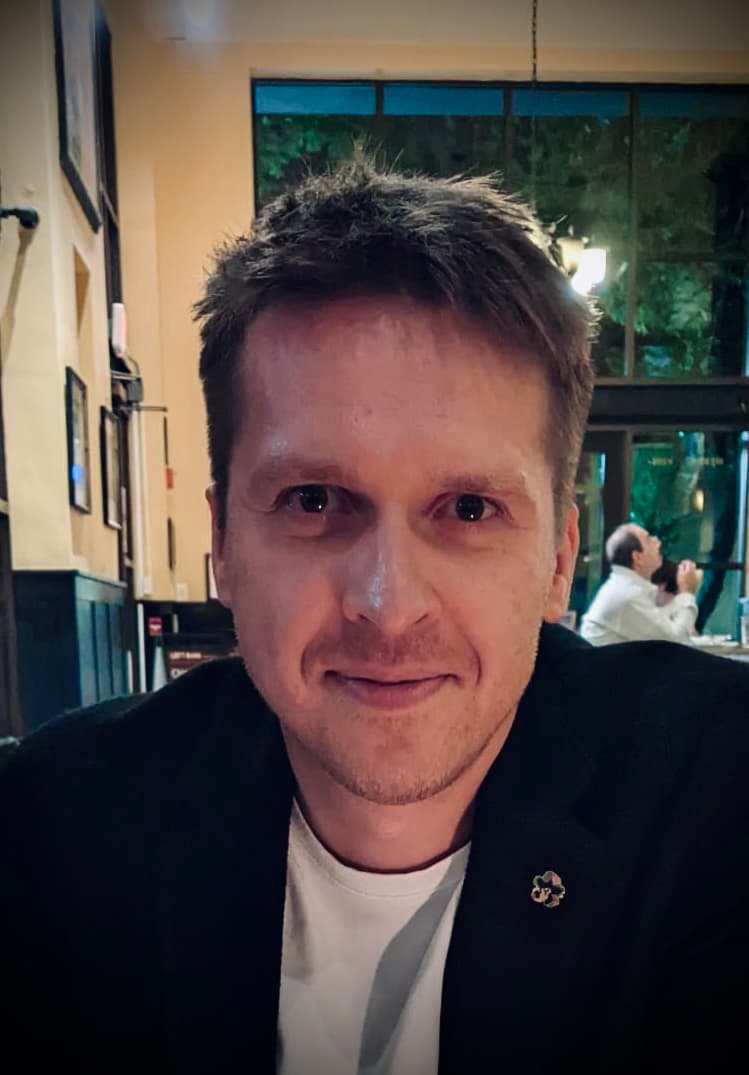
I am a Staff AI Research Scientist at Meta Superintelligence Labs. In my previous life I was a condensed matter physicist. I worked on strongly correlated quantum materials, the fractional quantum Hall Effect, and soft condensed matter. Before joining Meta, I was a physics professor at Brown University and the University of Maryland, College Park.
My AI research spans large language models, scientific foundations of scaling, data, reasoning, model compression, adaptable architectures, and interpretability.
My current (and, possibly, final) project is on automating scientific discovery.
AI
I used to think about AI as a scientific discipline, where the main question is: How does intelligence emerge from compute, data, and sampling? Is it possible to model the emergence of intelligence like we model the emergence of superconductivity or topological phases? Today I mostly think about how to design and build a system that will answer these questions for me. What ingredients are missing today?
- Autonomous scientific discovery.
- Multiagent research systems.
- Science of LLMs: initialization, scaling laws, post-training, evaluation, interpretability, sampling.
- Science of data: toy models, artificial data, model collapse, curricula.
- Science of reasoning: inference and pre-training trade-offs.
- Science of efficiency: pruning, quantization, distillation, efficient architectures.
Theoretical physics
The unifying theme of my physics research was emergence in classical and quantum systems. I was particularly interested in phenomena where topology, geometry, and interactions between constituents conspire to create unique quantum material properties.
- Topological phases of matter and fractional quantum Hall effect
- Fractons and topological glass
- Active matter
- Correlated systems in curved space
Vitae
 Staff AI Research Scientist, Meta Superintelligence Labs, 2024–present
- Senior Research Scientist, Meta FAIR, 2022–2024
 Assistant Professor, University of Maryland, 2022–2024
 Assistant Professor, Brown University, 2019–2022
 Postdoctoral Fellow, UC Berkeley, 2018–2019
 Kadanoff Fellow, University of Chicago, 2015–2018
 Ph.D. in Physics, Stony Brook University, 2009–2015
 B.Sc. in Physics, Saint Petersburg State University, 2005–2009
Honors
- 2025Simons Collaboration on the Physics of Learning
- 2022Sloan Research Fellowship
- 2021NSF CAREER Award
Selected papers
Artifacts of the previous format.
AI
Science of LLMs & emergence
- 2026On the Origin of Neural Scaling Laws: From Random Graphs to Natural Language · ICML '26 (Spotlight)
- 2026Learning Rate Transfer in Normalized Transformers · arXiv:2604.27077
- 2026A Scalable Measure of Loss Landscape Curvature for LLM Training Dynamics · arXiv:2601.16979
- 2024Learning to Grok: Emergence of In-Context Learning and Skill Composition · NeurIPS '24 (Oral)
- 2023Grokking Modular Arithmetic · arXiv:2301.02679interactive ↗
- 2023Critical Initialization of Wide and Deep Neural Networks · NeurIPS '23 (Spotlight)
Data
Architecture & efficiency
- 2026MobileLLM-Flash: Latency-Guided On-Device LLM Design · ACL '26 (Industry Oral)
- 2025The Unreasonable Ineffectiveness of the Deeper Layers · ICLR '25
- 2025Towards Distributed Neural Architectures · arXiv:2506.22389
Theoretical physics
Mentorship
Ph.D. students
- Darshil Doshi · Postdoc, JHU
- Tianyu He · Research Scientist, StepFun
- Aritra Das · Ph.D. student, UMD
Research interns
- Tianyu He · Research Scientist, StepFun
- Aditya Cowsik · Jane Street
- Boris Shigida · Ph.D. student, Princeton
- Dayal Kalra · Ph.D. student, UMD